OUH team get funding to study treatment for ankle arthritis caused by haemophilia
12 November 2026
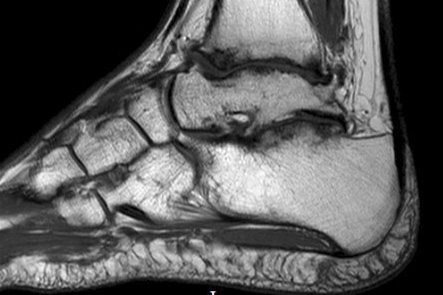
MRI scan of a haemophilic ankle
Two members of OUH’s Oxford Haemophilia and Thrombosis Centre have received national funding to expand their research into whether a fluid found in joints could be used to improve treatment for ankle arthritis caused by haemophilia.
Consultant Haematologist Dr Nicola Curry and Senior Haemophilia Physiotherapist Steph Taylor, who also work in the Nuffield Division of Clinical Laboratory Sciences in the Radcliffe Department of Medicine, have been awarded £520,000 by the National Institute for Health and Care Research (NIHR) Research for Patient Benefit (RfPB) programme to carry out the multicentre clinical trial.
People with haemophilia experience repeated bleeding into their joints, which causes long-term irreversible damage, known as haemophilic arthropathy. The ankle is the joint most likely to be affected, with three out of five people with haemophilia having ankle joint damage by the age of 30.
The debilitating pain experienced by patients with this kind of ankle arthritis impacts every aspect of their lives. There are few good treatments, as patients with haemophilia have unique needs.
Working with colleagues in the Surgical Intervention Trials Unit in the Nuffield Department of Surgical Sciences and the Nuffield Department of Orthopaedics, Rheumatology and Musculoskeletal Sciences, Dr Curry and Steph Taylor will test whether treating people with haemophilic ankle arthropathy using intra-articular hyaluronic acid - sometimes called a ‘liquid cartilage’ - will improve their pain, as well as ankle function and quality of life.
The study, which has been developed with, and has strong support from, patients with haemophilia, builds on a pilot study conducted by the team in 2023, which showed early evidence that hyaluronic acid reduced pain and improved ankle function.
This pilot study, sponsored by OUH, was pivotal in achieving the funding from the NIHR.
The RfPB funding will allow the study team to complete a much larger, placebo-controlled trial across the UK, to answer definitively whether hyaluronic acid reduces pain, increases ankle function and improves overall quality of life for patients.
Speaking about the award, Dr Curry said: “Steph and I are delighted to have support from the NIHR for this trial. We were asked by our patients in 2018 to investigate better treatments for ankle arthropathy. To be able to deliver this national trial is exciting, as we will be able to provide important answers to our patients. It has been, and will continue to be, a truly patient-designed clinical trial.
“Our study has the potential to open new avenues for routine therapy for our haemophilia patient group.”
Hyaluronic acid is naturally found in many joints in the body, and injections of it are sometimes used as a treatment for knee pain caused by osteoarthritis.