We provide specialist assessment and management for people with bronchiectasis, including those with bronchiectasis associated with other lung conditions such as:
- primary and secondary immunodeficiency syndromes (shared care with immunology)
- non-tuberculous mycobacterial pulmonary disease
- chronic aspergillus-related lung disease
- rheumatoid arthritis and inflammatory bowel disease
- primary ciliary dyskinesia.
Our clinic aims to:
- confirm a definitive diagnosis of bronchiectasis
- determine any underlying causes for bronchiectasis, acknowledging that over 50 percent of patients may not have an identifiable cause
- develop a personalised self-management plan and communicate it to both the patient and their GP
- regularly monitor patients who meet the criteria for secondary care follow-up.
Our team
We work as a multidisciplinary team to optimise the health, wellbeing and quality of life of people with cystic fibrosis and bronchiectasis.
We prioritise listening to our patients and their families, and we deliver compassionate, personalised, high-quality care. We foster a positive and supportive work environment, promote continuous learning and improvement, and develop our services sustainably.
Our multidisciplinary team includes four Consultants in Respiratory Medicine along with Specialist Respiratory Physiotherapists, Specialist Nurses and Secretaries.
Consultants
- Dr Stephen Chapman
- Dr William Flowers
- Dr Natasha Hough
- Dr Nicholas Talbot
Nursing team
- Tina Appiah
- Cathie Male
- Kat Paprot
- Anu Pillai
- Claire Roche
Physiotherapy team
- Mat Bulpett
- Jayne Faulkner
- Ali Gates
- Jo Hobbs
- Alice Midwinter
- Davide Strappelli
- Ruthuvik Aurokumar (Exercise Practitioner)
New patients
At their first clinic appointment, patients with a new diagnosis of bronchiectasis will see:
- a Doctor (Consultant, Specialist Registrar or Clinical Fellow)
- a Specialist Respiratory Physiotherapist.
Patients who meet the criteria for secondary care monitoring will be reviewed at regular intervals to assess for any changes in their condition.
Complex cases are discussed weekly at a multidisciplinary (MDT) meeting.
Your appointment
You will have your spirometry (lung function test) checked.
The Doctor will ask about your medical history, examine you, arrange investigations looking for treatable causes for bronchiectasis, and advise on suitable treatments.
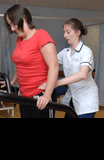
The Specialist Respiratory Physiotherapist will ask about symptoms and provide assessment and advice on airway clearance and physical activity.
We will establish an individualised treatment plan and communicate this to you and your GP.
Clinics
We currently offer a mix of virtual, telephone and face to face bronchiectasis clinics for routine care.
If you are not attending in person, we favour using virtual appointments using the NHS Attend Anywhere video consultation platform, although some appointments can take place over the phone.
If attending a virtual clinic, please use the Attend Anywhere link to join at your allocated appointment time.
Our virtual clinic takes place on Tuesday mornings, our face to face clinics take place on Tuesday afternoons, and we have a clinic on Wednesday afternoons for patients with complex lung infection due to Mycobacterium abscessus.
Clinic appointments may take up to one hour, depending on which members of the team you need to see. At every clinic visit you should expect to see a Doctor, and you may also see a Physiotherapist.
Research
We are actively involved in research to improve treatment and care for people living with bronchiectasis.
We may invite some patients attending the clinic to take part in clinical studies, where appropriate.
We are currently involved in national bronchiectasis research, including the AIR-NET study and the ESCAPE study.
If you are interested in taking part in bronchiectasis research, or would like to find out more, please contact us.
AIR-NET
AIR-NET is looking at whether existing medicines with anti-inflammatory effects could be used to reduce airway inflammation in people with bronchiectasis.
The aim is to find better ways to treat the underlying inflammation that contributes to symptoms and flare-ups.
ESCAPE
ESCAPE is studying the best way to manage a new infection with Pseudomonas aeruginosa, a bacteria that can be important in bronchiectasis.
The study compares eradication treatment with usual symptom-based care, to help understand which approach is safest and most effective for patients.
Contact us
If you would like more information about Oxford Bronchiectasis Clinic, please contact us.
Oxford Bronchiectasis Clinic
Cystic Fibrosis and Bronchiectasis
Chest Offices, Respiratory Medicine
Churchill Hospital
Old Road, Headington
Oxford OX3 7LE
Medical Secretary / Administrator
Connie Fine: connie.fine@ouh.nhs.uk
Tel: 01865 227921
Patient information and self-management advice
Good information and self-management support can help people with bronchiectasis understand their condition, recognise changes in symptoms and know when to seek help.
We encourage patients and carers to use trusted sources of information.
The following websites provide helpful advice about bronchiectasis, day-to-day management, airway clearance, flare-ups and living well with a long-term lung condition.
Asthma + Lung UK
Asthma + Lung UK provides clear information about bronchiectasis, including symptoms, diagnosis, treatments, flare-ups and practical advice for managing the condition.
Asthma + Lung UK: Bronchiectasis
European Lung Foundation: Bronchiectasis
The European Lung Foundation: Bronchiectasis Patient Priorities is a patient-focused resource developed with input from patients and healthcare professionals.
It provides information to help people understand bronchiectasis, manage symptoms, prepare for appointments and discuss what matters most to them with their healthcare team.
European Lung Foundation: Bronchiectasis
Physiotherapy: Bronchiectasis Toolbox
Physiotherapy is an important part of bronchiectasis care for many patients. This resource provides information about airway clearance techniques, breathing exercises, physical activity and ways to help clear sputum from the lungs.
Physiotherapy: Bronchiectasis Toolbox
Advice for primary care
The National Institute for Health and Care Excellence (NICE) has produced a concise, accessible Clinical Knowledge Summary for bronchiectasis: