OUH launches kidney transplant pilot
09 November 2026
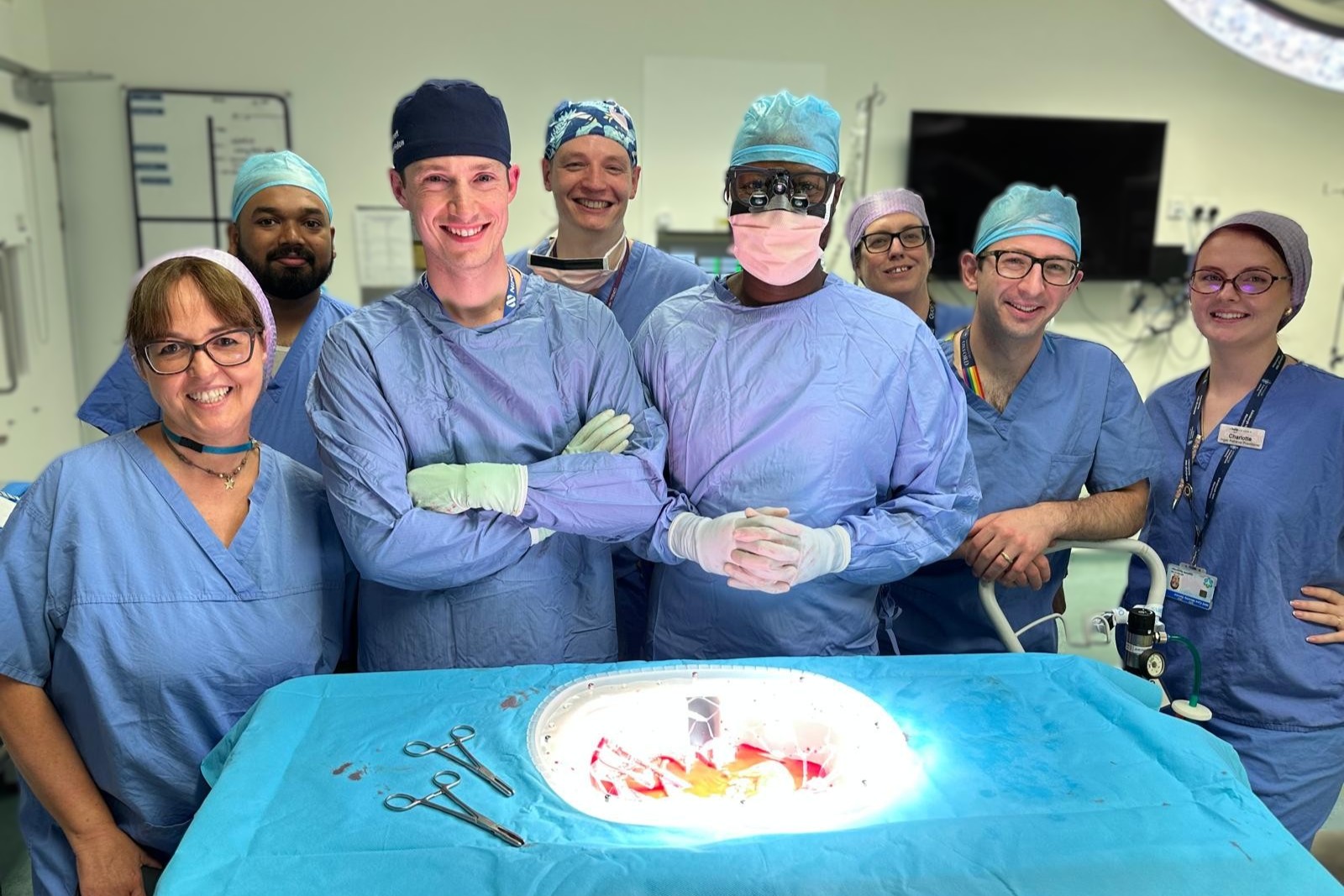
Members of the Oxford Transplant Centre team
Oxford University Hospitals (OUH) has launched a new NHS Blood and Transplant (NHSBT) pilot that could increase the number of donated kidneys available for transplantation.
Based at the Oxford Transplant Centre at the Churchill Hospital, the Oxford Assessment and Recovery Centre (ARC) will assess donor kidneys that might otherwise not be used for transplantation.
The centre is part of a national network of pilot sites assessing donated kidneys, lungs and livers, with OUH among the centres focusing on kidneys.
OUH currently performs around 170 kidney transplants each year and serves a large region covering Oxfordshire, as well as areas from Swindon in the south, Gloucester in the west, High Wycombe in the east and Banbury in the north.
Under the pilot, kidneys that have not been accepted for transplantation through the standard assessment process can be referred to specialist ARC centres for further evaluation. Here they are connected to a machine which circulates oxygenated blood through the kidney, helping to preserve the organ while clinicians carry out additional testing.
The additional time provided by the technology allows transplant specialists to make a more informed decision about whether a kidney can be safely transplanted. Clinicians can assess how the organ is functioning and, where appropriate, carry out a biopsy before determining whether it is suitable for a recipient.
The approach aims to give potentially transplantable kidneys a second chance, helping clinicians make more considered decisions about organs that might otherwise be declined.
The ARCs programme introduces a new model of transplantation in which an organ is donated at one hospital, taken to a second hospital to be placed on a perfusion machine where its function is carefully assessed, and then transplanted at a third hospital.
Developed by NHSBT, in collaboration with the transplant community, and funded by the Department of Health and Social Care, ARCs is the first national programme of its kind in the world.
NHSBT estimates that a fully established national ARC network could enable up to 700 additional transplants each year across kidney, liver and lung services by allowing more donated organs to be assessed and used with confidence.
Sanjay Sinha, Consultant Transplant Surgeon and Clinical Director for Transplantation at OUH, said: "Every year, some donated kidneys are declined because there is not enough time to fully assess how well they are likely to function after transplantation. This pilot gives us the opportunity to carry out additional testing and make more informed decisions about kidneys that might otherwise not be used.
“By creating extra time for assessment, we hope to increase the number of donated kidneys that can be transplanted safely, helping more patients benefit from the gift of organ donation.
"We are also very grateful for the support from the Oxford Transplant Foundation, which funded the equipment, to make this pilot possible for us in Oxford."
Professor Andrew Brent, Chief Medical Officer at OUH, said: "This pilot has the potential to help more patients receive transplants by giving clinicians more time and information to assess donated organs.
"We are proud to work with NHS Blood and Transplant on this initiative, building on Oxford's expertise in kidney transplantation and organ perfusion to support better use of donated organs."
If the ARC pilot is successful, this may become a commissioned service by the Department of Health and Social Care, which will benefit patients across England, Scotland, Wales and Northern Ireland.