Service redesign more than halves waiting list for specialist care in six months
16 September 2026
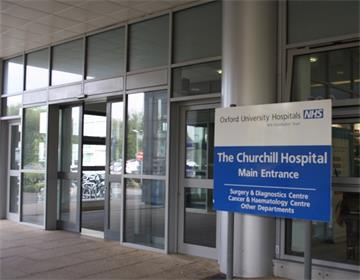
The Lower Gastrointestinal (LGI) Physiology Service is based at the Churchill Hospital
A major redesign of the Lower Gastrointestinal (LGI) Physiology Service at the Churchill Hospital, part of Oxford University Hospitals (OUH), has significantly reduced waiting times, and improved the patient experience and access to specialist care for patients across Oxfordshire.
The service provides specialist support for patients with complex bowel and pelvic floor conditions, and is delivered by a multidisciplinary team.
In the last six months, the waiting times for new healthy bowel clinic appointments has reduced from 54 weeks to 11-14 weeks, while waits for anorectal physiology appointments have fallen from 26 weeks to around seven weeks. The overall number of patients waiting for a first appointment has reduced from 244 to 103, with around 80 patients now seen each month across specialist clinics.
Patients who enter the service no longer experience waits for follow-up appointments, enabling clinicians to review progress and adjust treatment plans more quickly. Report turnaround times for anorectal physiology investigations have also improved from four to eight weeks to just one to seven days.
The service was redesigned in response to increased demand and lengthy waiting lists following the COVID-19 pandemic. By introducing clearer referral pathways, expanding clinic capacity and improving continuity of care, the team has significantly improved patient flow while ensuring patients receive the most appropriate treatment sooner.
Kim Gorissen, Lead for Oxford Pelvic Floor and Sacral Nerve Stimulation Service at OUH, explained: "The improvements were driven by a review of referral pathways, which found that some patients were being referred before conservative treatments had been fully explored, while others requiring specialist assessment were waiting unnecessarily.
"We have tackled the waiting list from multiple angles, and a huge amount of multidisciplinary teamwork and coordination has gone into redesigning the service. It is particularly rewarding to receive such positive feedback from patients, who have praised both the care they received and the improvements made to the service."
One patient said: "Very professional service. Staff were understanding and helpful. They have definitely made a difference to my symptoms and how I can cope."
Another commented: "I found the team members kind and helpful, patient, and understanding. They deal with very sensitive issues in a professional way. Thank you."
Felicity Taylor-Drewe, Chief Operating Officer at OUH, said: "Reducing waiting times and improving access to care is one of our key priorities, so it is fantastic to see the impact this service redesign has had for our patients.
"These results demonstrate what can be achieved when clinical and administrative teams work together to redesign services around patients' needs. As well as improving efficiency, the changes are helping patients access specialist care sooner and receive a better overall experience. Thank you to everyone involved in making this happen."