First UK recruit for trial exploring effects of drug on liver in psoriasis patients
27 July 2026
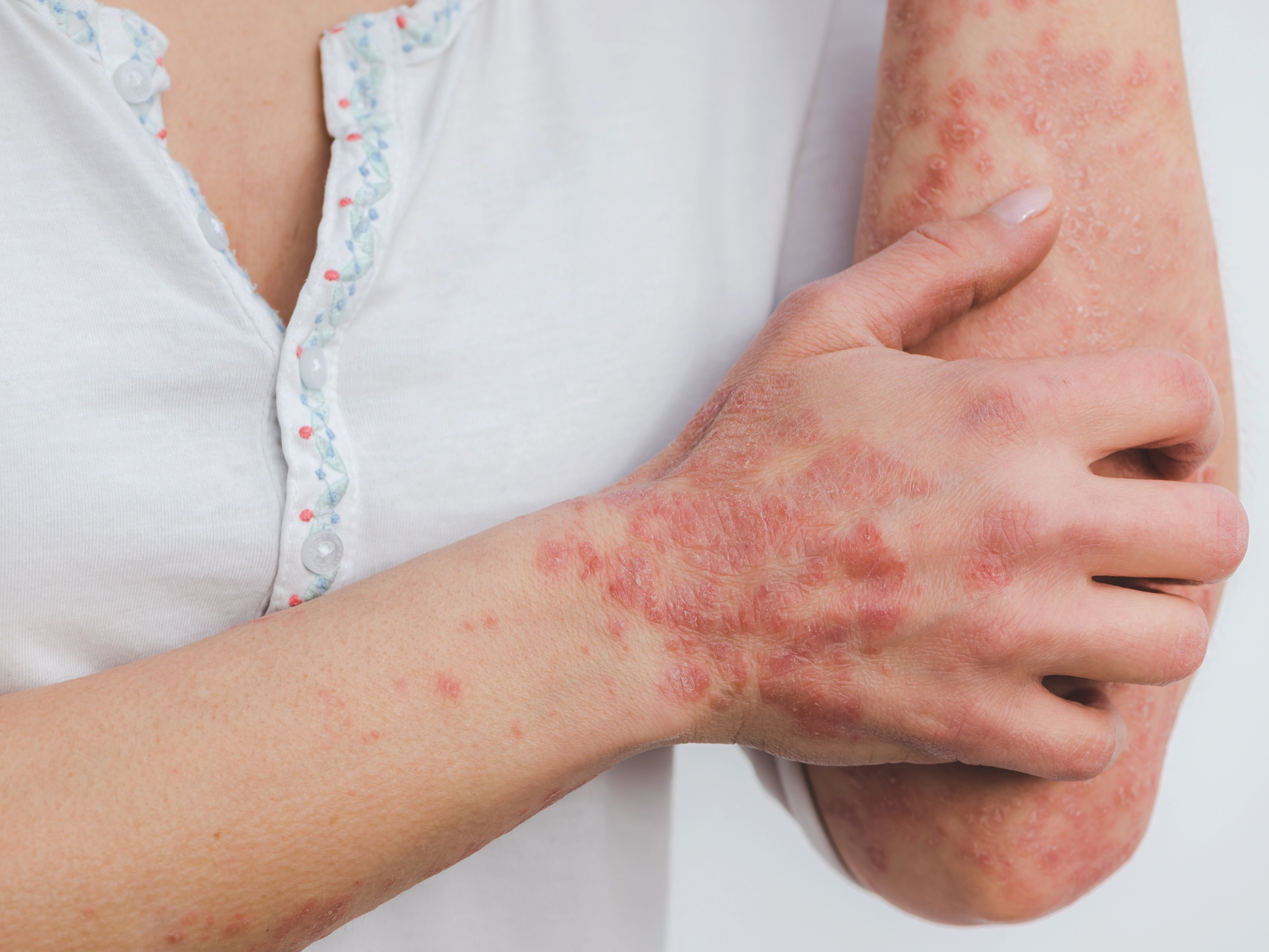
Image: Eszter Miller from Pixabay
Researchers at the Nuffield Orthopaedic Centre have recruited the first patient in the UK to a clinical trial investigating how a new drug affects liver inflammation and scarring in people with psoriatic disease using a new non-invasive MRI scanning technique.
The BALANCE study, which is being led by the Oxford Clinical Trials Research Unit’s Experimental Medicine and Rheumatology group, aims to recruit 30 participants with psoriasis or psoriatic arthritis across four NHS sites in England. The study will include patients who are switching to the biologic monoclonal antibody Bimekizumab as part of their routine care. A biologic monoclonal antibody is a laboratory-produced protein designed to mimic the body’s immune system, and Bimekizumab works by blocking two inflammatory proteins.
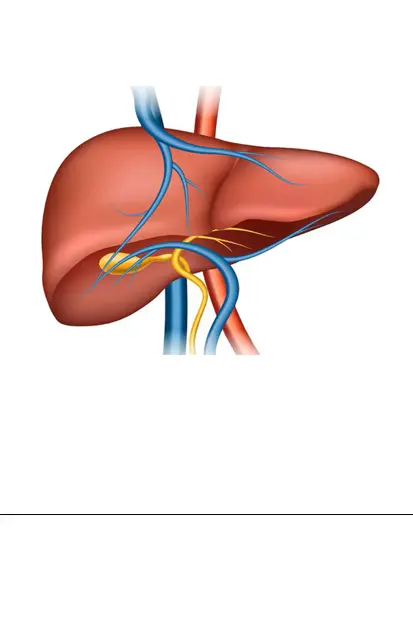
People with psoriatic disease are at increased risk of developing liver disease, due in part to some of the medications that are used to try to treat it. As well as affecting patients’ general health and quality of life, liver disease can also make treatment of psoriatic disease more difficult.
Previous research by the Oxford study team suggests that treatments for psoriatic disease that block an inflammatory protein called interleukin-17, such as Bimekizumab, may help to improve liver health.
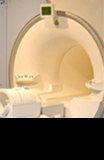
Participants in the trial will receive a multi-organ MRI scan before being treated with Bimekizumab and then six months after starting treatment to assess any changes in the liver and other organs.
The study team is using University of Oxford spin-out company Perspectum’s new software, CoverScan, which can analyse MRI data to determine the level of inflammation and fibrosis in the liver, heart, lungs, kidneys, pancreas and spleen.
“The main aim of our study is to assess what impact Bimekizumab might have on measures of liver disease and to investigate the impact of the disease and the treatment on different organs of the body,” said the study’s Chief Investigator, Laura Coates, NIHR Research Professor and Senior Clinical Research Fellow in the Nuffield Department of Orthopaedics, Rheumatology and Musculoskeletal Sciences and an Honorary Consultant Rheumatologist at Oxford University Hospitals.
“We are hoping that the information gained from the BALANCE study might help to widen our understanding of these mechanisms, as well as informing possible future treatment of liver disease in people with psoriatic disease.”