World-first perfused pancreas transplant marks major milestone
10 July 2026
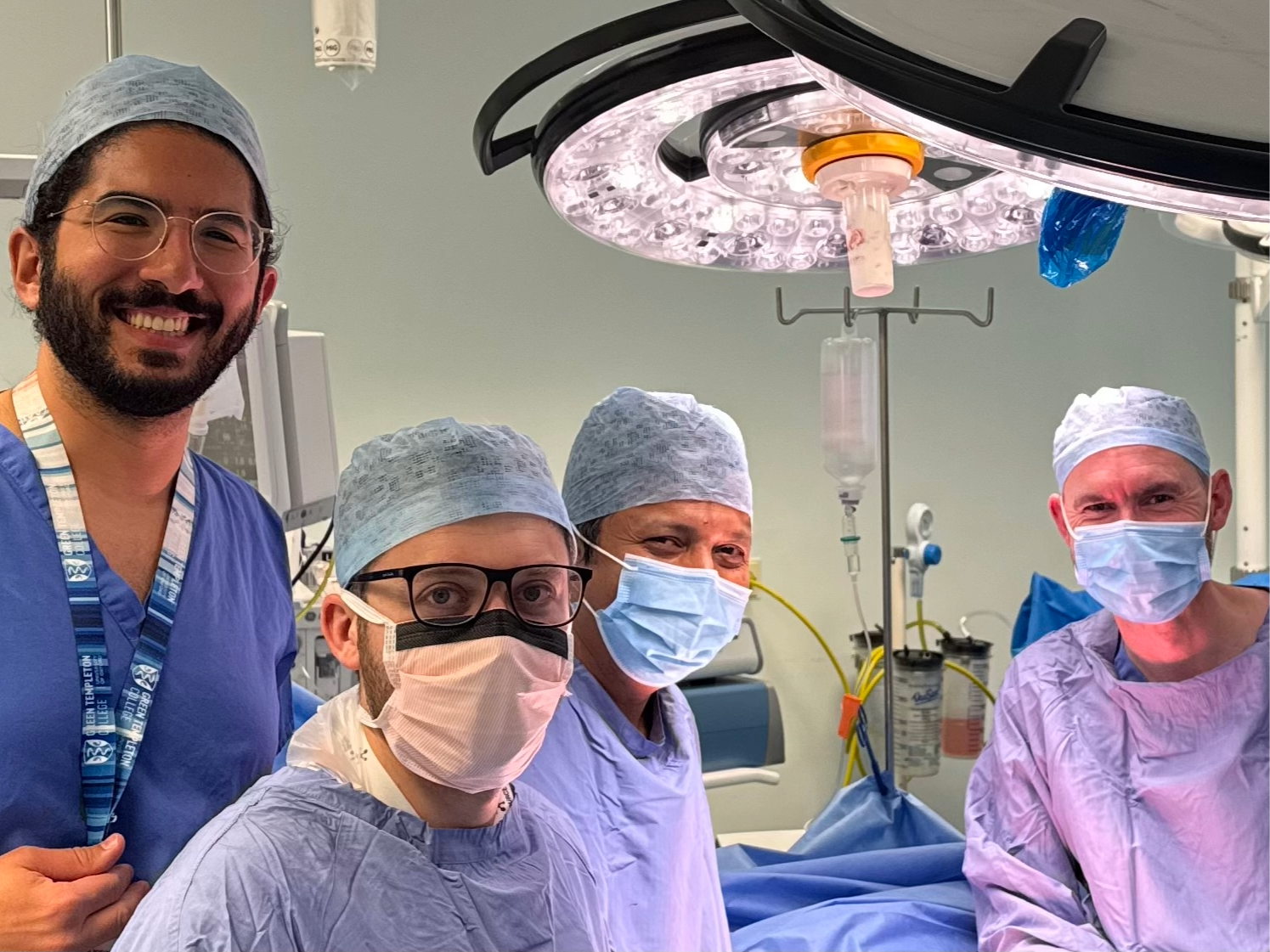
Some of the research and surgical team who carried out the first case: from left to right, Dr Mohamed Elzawahry, Dr Patrick Jull, Mr Venkatesha Udupa and Professor James Hunter.
University of Oxford researchers have carried out the world’s first successful transplantation of a perfused human pancreas, a major advance in efforts to improve organ preservation for transplantation.
The preclinical work was supported by the NIHR Biomedical Research Centre: Oxford.
The pancreas is one of the most challenging organs to preserve. It is particularly vulnerable to damage during the period between donation and transplantation; the current standard method – static cold storage – slows deterioration but cannot prevent it.
Improving preservation is therefore critical to increasing the number of pancreases suitable for transplant and reducing post-transplant complications.
Oxygenated hypothermic machine perfusion is an emerging technology that may better protect organs during storage by supplying oxygen and removing harmful metabolites. This approach has the potential to improve organ quality and transplant outcomes.
The Hypothermic Oxygenated Pancreas Perfusion (HOPP) study will recruit 30 patients from the simultaneous kidney–pancreas transplant waiting list at Oxford University Hospitals NHS Foundation Trust.
The study is evaluating a novel preservation technique that circulates oxygenated cold fluid through donor pancreases, replacing the traditional method of static cold storage on ice. Pancreas transplantation – often performed alongside kidney transplantation for people with severe diabetes – can restore normal blood glucose control and remove the need for insulin therapy.
However, the limitations of current preservation methods mean that up to half of donated pancreases are ultimately not used for transplantation.
Building on advances in kidney and liver transplantation, the HOPP study will perfuse each donor pancreas for two hours while the recipient’s kidney transplant is underway, before transplanting the pancreas using standard surgical techniques.
Outcomes will be compared with those of 60 recent patients whose organs were preserved using conventional cold storage. Researchers will assess pancreas and kidney function, complications, surgical requirements and length of hospital stay.
A dedicated patient and public involvement (PPI) group has played a central role in shaping the study design and will continue to support oversight and dissemination throughout the project.
The study is led by Professor James Hunter, of the University of Oxford’s Nuffield Department of Surgical Sciences and lead for the BRC Oxford surgical sub-theme looking at organ assessment and repair. Day-to-day delivery of the study is overseen by Dr Mohamed Elzawahry, post-doctoral academic clinician.
Professor Hunter said: “It is an exciting time to be part of this research project, and although it is early days, having such a positive outcome for the first patient is very promising. Without the generosity of families who support donation, this study would not be possible, and lifesaving transplants would not happen.”
Dr Elzawahry added: “Successfully recruiting our first participant marks a significant achievement in the challenging field of pancreas preservation and a critical step towards translating pancreas perfusion into clinical practice.”
The HOPP study is funded by the National Institute for Health and Care Research (NIHR) and supported by commercial partner Bridge to Life, which is providing the VitaSmart™ Hypothermic Oxygenated Perfusion System used for pancreas perfusion.
Mauricio F. Carvalho, Vice President of Medical and Scientific Affairs at Bridge to Life, said: “This milestone represents an important step forward for pancreas preservation research and the broader field of organ transplantation. While machine perfusion has already demonstrated promise in other organs, studies such as HOPP will help generate critical evidence regarding the role of oxygenated hypothermic perfusion in improving organ preservation, expanding organ utilisation, and ultimately increasing access to transplantation.”
The study was approved by NHS Blood and Transplant (NHSBT) and is being delivered through the NHSBT Clinical Trials Unit, with operational support from NHSBT.