OUH healthcare professionals embark on research career
01 July 2026
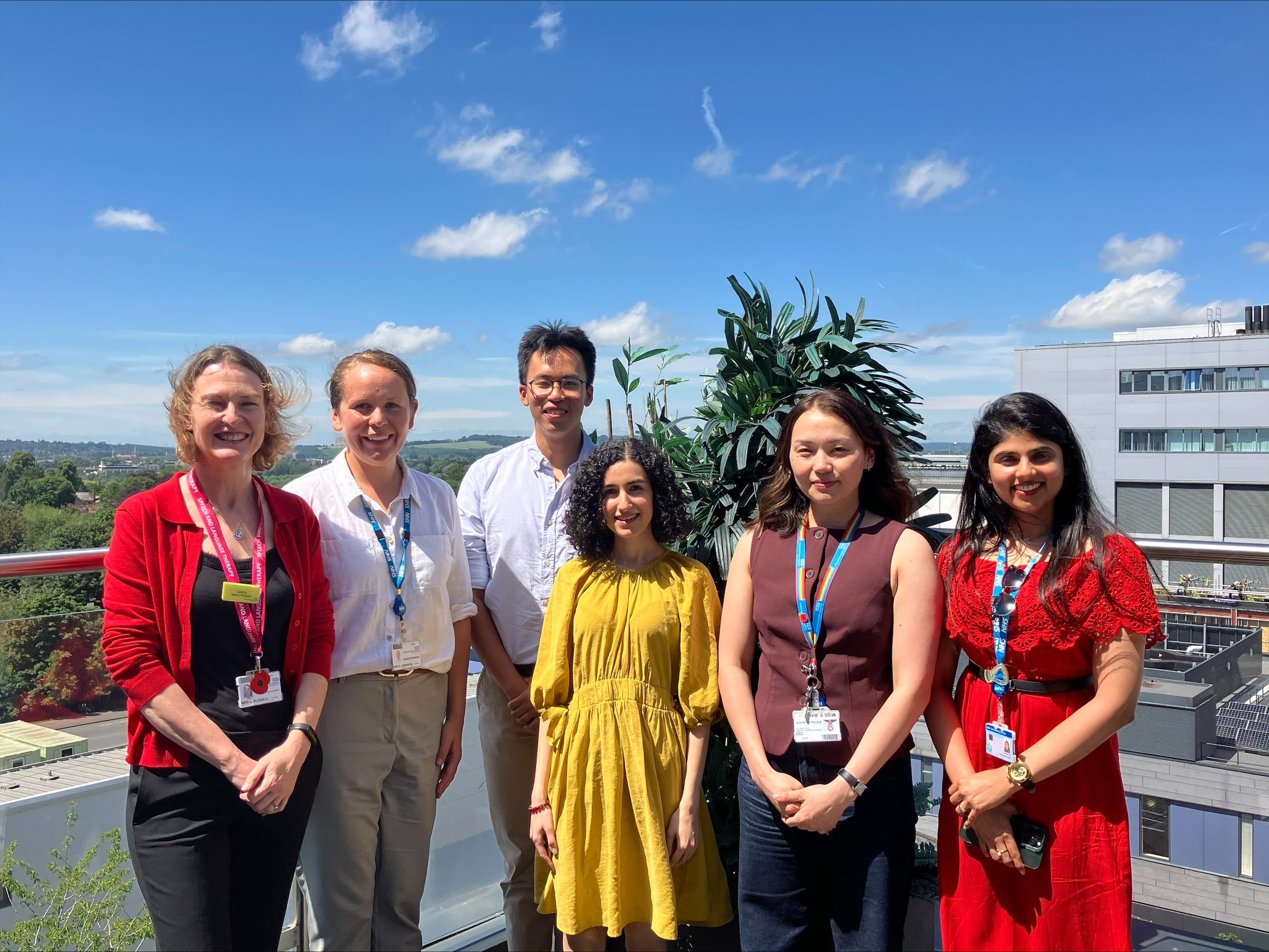
The six interns (from left to right): Laura Russell, Gemma Carpenter, Kelvin Tse, Soroyya Moradi, Sandhya Rai and Hema Sree Nirmal Kumar.
Six Oxford University Hospitals healthcare professionals have completed the first stage of their research journey by presenting the research projects they have undertaken on the NIHR BRC: Oxford internship programme.
Every year, the NIHR Biomedical Research Centre: Oxford (BRC) makes funds available to support the development of research skills and knowledge for nurses, midwives, allied health professionals, healthcare scientists, pharmacists and clinical psychologists (NMAHPPS). The funding covers salary costs for nine months part-time, allowing the interns to have protected time.
The BRC Oxford internships are aimed at NMAHPPS with little or no research experience. The interns select a research topic that relates directly to their area of clinical work. During the internship, they are offered workshops and seminars to give them the skills and practical knowledge to carry our effective research. They all have an experienced healthcare researcher mentor, as well as access to senior clinical expertise.
The six interns presenting their projects were:
- Kelvin Tse – Hand Therapist
- Hema Sree Nirmal Kumar – Healthcare Scientist, Intraoperative physiologist, Neurophysiology
- Soroyya Moradi – – Research Technician, Nuffield Department of Surgical Sciences
- Sandhya Rai –Clinical Specialist Nurse, Congenital Myasthenia Service
- Gemma Carpenter – Physiotherapist neuromyelitis optica (NMO) service
- Laura Russell – Speech & Language Therapist, ENT/Voice Service
Dr Clair Merriman, Lead for NMAHPPS Research and Innovation in NOTSSCaN Division and organiser of the BRC internship scheme, said: “This popular scheme continues to attract healthcare professionals from across the Trust, who not only see this as a way of launching an clinical academic career, but also recognise the positive impact it can have on service delivery and outcomes for patients in their area of work.”
“The presentations given by these interns have been fantastic; they reflect the hard work and dedication they have demonstrated over the past nine months. This scheme is a chance for NMAHPPS to see if a career in research is for them – based on the enthusiasm they have shown, I hope these six decide to continue on this clinical academic path.”
One of the interns, Hema Sree Nirmal Kumar, who works in the Clinical Neurophysiology team at the John Radcliffe Hospital, said that with the support of her internship supervisor, Dr Claire Clews, she was planning to publish her research and was preparing to apply for an NIHR doctoral fellowship.
“This internship laid the foundation for my research career and opened up the networking opportunities. Now, I know where and how to seek guidance.
“Working as a clinician, I never thought that I would be able to do research myself even though I’ve always been intrigued by innovative ideas. This internship has definitely eased the fear of the unknown regarding research.”
Research Technician Sorayya Moradi, another of the interns, said: “I really enjoyed the dedicated time to work on a research project where I could develop my techniques and understand academic research better.
“I was surprised at the amount of independent drive required for academic research and delays involved for planning and running experiments, although I enjoyed these challenges and I believe they were necessary for my growth. The internship has allowed me gain clarity on my career direction, which is to continue contributing to clinical research,” said Sorayya, who will begin studying for an MSc in precision cancer medicine at the University of Oxford in October.
The interns’ projects:
Laura Russell carried out an evaluation of the wellbeing of patients with the voice disorder laryngeal dystonia. She found that even when they receive excellent medical care, the condition can have a major impact on daily communication, quality of life and emotional wellbeing. The evaluation found that patients wanted clearer access to extra support, including speech and language therapy, peer support and self-management resources.
Hema Sree Nirmal Kumar’s systematic review of 13 studies found that monitoring thigh muscles, especially the quadriceps, during spinal fusion surgery for adolescent scoliosis can help detect early signs of nerve risk and support safer surgery. The findings support adding standardised quadriceps monitoring to scoliosis surgery protocols, and Hema will now share the results with her team so the department protocol can be updated.
Sorayya Moradi’s project explored how the immune system behaves in aggressive oesophagogastric cancer, particularly in tumours with high chromosomal instability, to assess whether this could be used as a clinical marker. Researchers collected blood and tumour samples from 47 patients and developed methods to analyse immune cells and score chromosomal instability in the tumour samples.
Gemma Carpenter carried out an evaluation looking at why some patients in the NMO service do not complete their patient-reported outcome measures before clinic, despite their value in tracking symptoms and quality of life. She found that they often struggled to complete the forms because of their eyesight, or because they were unsure how the information would be used.
Sandhya Rai aimed to conduct a review into how nurses were contributing to the growing need got genetic counselling among patients with rare inherited neuromuscular diseases, but found no such studies, highlighting a major gap in evidence gap and the need for more research into how specialist nurses can support in this area.
Kelvin Tse carried out a review of how effective digital rehabilitation is for people with traumatic hand injuries. He found that use of this kind of technology appears safe and may improve recovery in the short term, especially when using movement-tracking tools, such as virtual reality, smartphone sensors or glove-based systems. But evidence is still limited, so bigger, more robust studies are needed before these approaches can be recommended widely.