Greener inhaler use cuts carbon emissions across OUH
26 May 2026
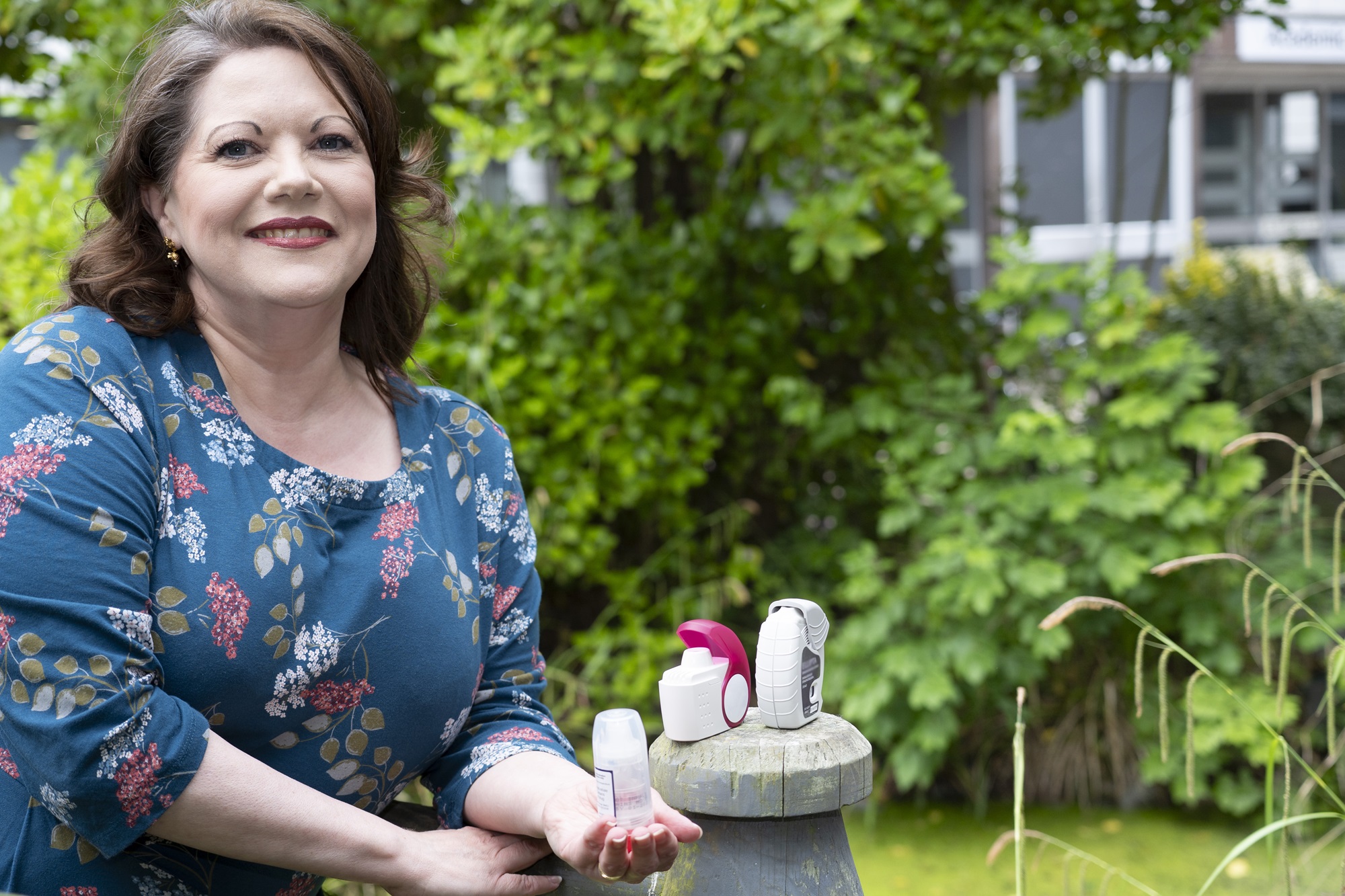
Sarah Poole, Advanced Clinical Pharmacist Lead in Respiratory Medicine
A shift towards lower‑carbon inhalers has helped cut carbon emissions at Oxford University Hospitals NHS Foundation Trust (OUH), supporting the wider NHS ambition to reach net zero and reducing the environmental impact of care.
Changes in prescribing practice, increased staff training and improved support for patients to use and dispose of inhalers correctly have helped reduce the carbon footprint of inhaler use across the Trust.
Carbon emissions linked to pressurised metered dose inhalers (pMDIs) given to patients across the Trust’s four hospitals reduced by 18% in the year 2025/26 compared to the previous year (2024/25) and has fallen by 22% compared to the first year of recording in 2022/23. The figures reflect changes in the types of inhalers used.
This could be a reduction of 300 tonnes of carbon dioxide equivalent (CO2e) over 12 months, equivalent to nearly 764,000 miles driven in a petrol car, which is just over three one-way trips to the moon.
pMDIs, often known as ‘puffers’, contain a potent greenhouse gas. While these inhalers remain essential for many people with asthma and chronic obstructive pulmonary disease (COPD), dry powder inhalers (DPIs) have a much lower environmental impact and are suitable for many patients.
Across OUH, clinicians are supporting patients to switch to dry powder inhalers where it is clinically safe and effective to do so, alongside improving education on correct inhaler technique in line with national guidelines. Incorrect inhaler use can reduce treatment effectiveness and increase healthcare needs and environmental impact.
Sarah Poole, Advanced Clinical Pharmacist Lead in Respiratory Medicine at OUH, has been leading this work across the Trust’s four hospitals and supporting shared asthma and COPD guidelines across the Thames Valley Integrated Care Board.
She said: “This project shows that we don’t have to choose between high‑quality patient care and protecting the environment – we can achieve both. For many patients, switching to a dry powder inhaler is clinically appropriate and significantly reduces carbon emissions.
"Just as important is making sure people feel confident using their inhaler properly. Good inhaler technique supports better health outcomes and helps avoid unnecessary additional treatment, which also reduces our environmental footprint."
For patients who are not suitable for dry powder inhalers, alternative and novel options are also helping to reduce emissions by using lower-impact propellants while ensuring effective treatment is maintained.
Safe disposal of inhalers is another simple but important step. When an inhaler is empty, up to 30% of the original gas can remain in the canister. If disposed of in household waste and sent to landfill, this gas can be released into the atmosphere.
Patients who use pMDIs are encouraged to return used or expired inhalers to community pharmacies where they can be safely disposed of.
Lisa Hofen, Chief Estates and Facilities Officer with responsibility for sustainability at OUH, said: "Reducing our carbon footprint is an essential part of how we deliver healthcare now and in the future.
"This significant reduction in emissions from inhalers shows the impact that clinical leadership, innovation and patient engagement can have when sustainability is embedded into everyday care.
"Thank you to all colleagues and teams involved with this achievement."
OUH is now looking to build on this success further, including developing educational resources for effective inhaler use, expanding staff training, and exploring opportunities to reintroduce inhaler recycling schemes.