Oxford patient thanks donors for life-changing treatment as new donor centre opens
21 October 2026
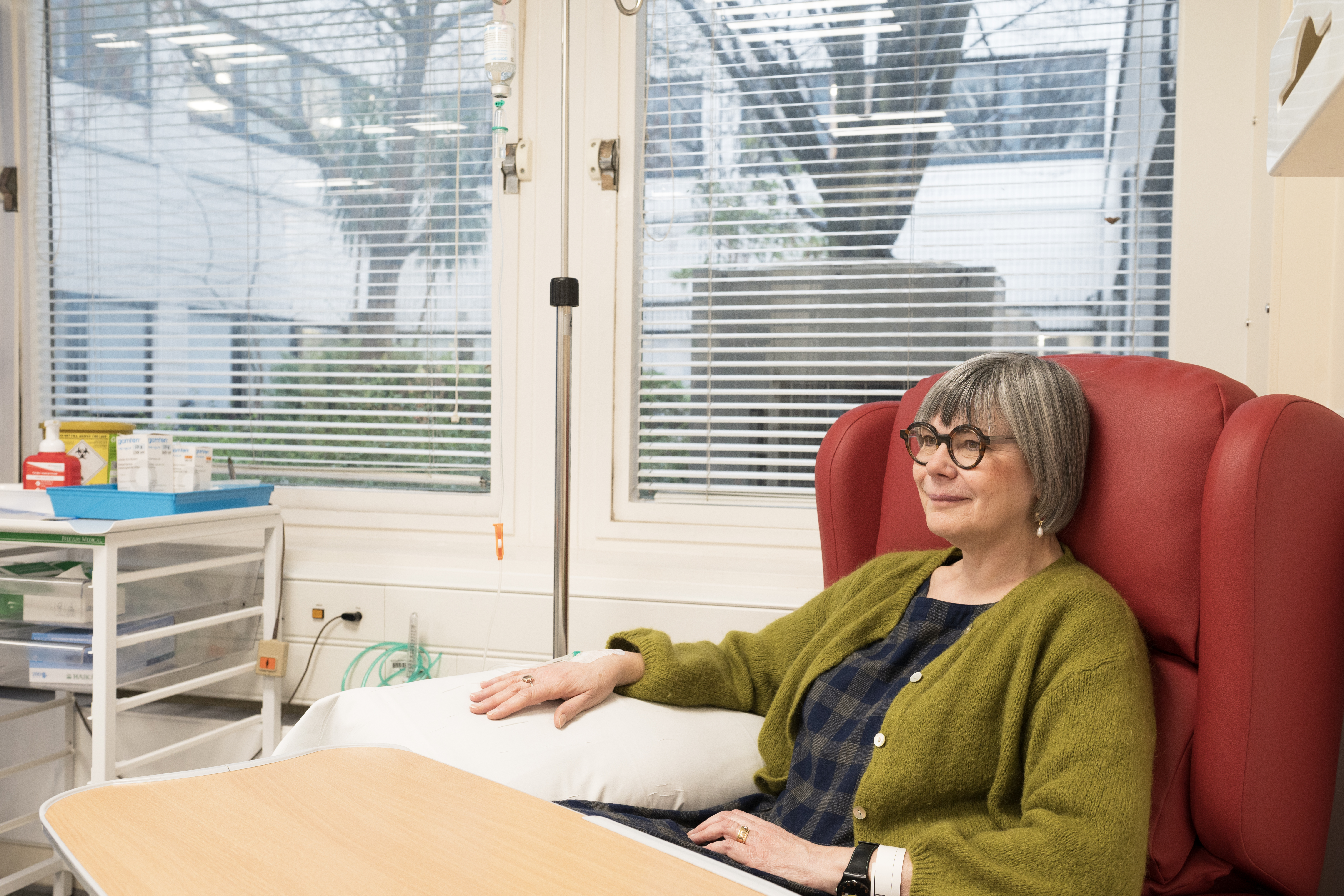
Jill Jones during a visit to the John Radcliffe Hospital
A patient who relies on medicine made from donated plasma is thanking blood and plasma donors and encouraging more people to donate, as NHS Blood and Transplant (NHSBT) opens its largest ever donor centre.
Jill Jones, 62, from New Marston, receives immunoglobulin infusions every three weeks at the John Radcliffe Hospital, part of Oxford University Hospitals NHS Foundation Trust (OUH). The treatment has transformed her health after years of repeated infections and hospital admissions.
The retired media manager supported NHSBT as it opened its new donor centre in Reading on Tuesday 20 October. It is the first in the country where people can donate blood, plasma and platelets under one roof, helping to provide blood products and plasma-derived medicines for patients across the NHS.
The development has particular significance for Jill. In March 2025, she made history at the John Radcliffe Hospital when she became the first NHS patient to receive immunoglobulin made from UK-donated plasma.
Jill was diagnosed with a primary immune deficiency in 2005 following treatment for non-Hodgkin lymphoma. She was first treated for Hodgkin lymphoma at 19 and again at 30, before being diagnosed with non-Hodgkin lymphoma at 40. Her final course of chemotherapy ended with a stem cell transplant in April 2005.
In the months that followed, she was constantly battling infections and often needed hospital admission for intravenous antibiotics while raising two young children. Her husband, Elfed, says he never knew whether she would be at home or in the Emergency Department when he returned from work.
Since starting immunoglobulin infusions, Jill has not needed hospital treatment for infections, apart from a short stay with COVID-19 in 2021, from which she made a full recovery.
She describes her regular visits to hospital for her intravenous immunoglobulin infusions as "like catching up with friends," adding the staff "are delightful and you get to know staff and patients really well".
Jill said: "Infusions have been life-changing for me in keeping me well. Before I started on them, I was regularly in hospital with infections, which just doesn't happen now. It's made a huge and positive difference to my life and my family's life.
"I would certainly have a very different life without my regular infusion and I am proud to have been one of the first patients in the UK to receive immunoglobulin that is now made from UK plasma. I have been on immunoglobulin for 20 years now and it makes a huge difference to my quality of life.
"The thought that we are now collecting plasma donations in the UK is fantastic, as it means we are not having to solely rely on a supply from abroad.
"I would like to say a very big thank you to anyone who donates blood or plasma, on behalf of myself and all the other patients I meet on my regular trips to the hospital. You are amazing."
Plasma makes up around 55% of blood, and plasma recovered from whole blood donations can also be used to make medicines including the immunoglobulin treatment Jill relies on. This means people who give whole blood, as well as those who donate plasma, can help patients who depend on these medicines.
Lee Wright, NHSBT’s Operations Support Lead for Plasma, said: "Having blood, plasma and platelet donation together in one centre is a real step forward for Reading and for NHS Blood and Transplant.
"It means donors can see the full range of ways they can help save and improve lives and it gives our donors even more opportunities to support patients, such as Jill, with the blood products when and where they need it most."
The Oxford Donor Centre is based on the John Radcliffe Hospital site. People interested in donating blood or plasma can find out more and book an appointment by visiting www.blood.co.uk or the NHS Give Blood app.