Wearable chest patch could support hospital-level care at home, study finds
13 October 2026
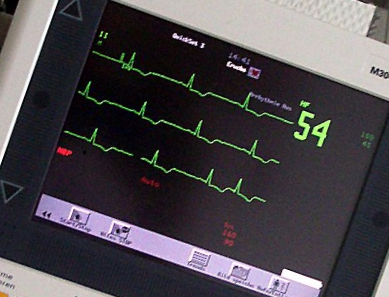
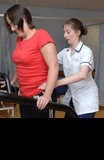
Image: Pflegewiki-User Würfel via Wikimedia Commons
Researchers in Oxford have shown that wearable chest patches can be used to effectively monitor vital signs in many acutely unwell patients receiving hospital-level care in their own homes.
The research team, from the Universities of Oxford and Warwick, found that wearable chest patches could make remote monitoring more reliable and less burdensome for acutely unwell patients at home, capturing vital-sign data consistently without requiring patients or carers to take repeated measurements themselves.
They said the study, supported by the NIHR Biomedical Research Centre: Oxford, showed that it was feasible to monitor patients at home, particularly when the measurements are collected automatically by wearables. They added that this kind of ‘passive monitoring’ may be particularly helpful for the care of older or frail patients.
The research involved 26 adult patients being cared for by Oxford University Hospitals (OUH) NHS Foundation Trust’s acute Hospital at Home (aH@H) service. They had a range of acute illnesses, including chest and urinary tract infections, heart failure and acute kidney injury.
In line with the NHS priority to shift more care out of hospitals and into the community, the aH@H service provides treatment and daily clinical assessment at home for people who would otherwise need admission to hospital, or helps them to be discharged sooner.
Participating patients wore a chest patch (VitalPatch, VitalConnect) that automatically measured their heart rate and breathing rate for up to seven days with the data available to their hospital-based healthcare team in real-time. Heart-rate readings were successfully captured in 89% of four-hour monitoring periods, and breathing rates in 75%.
Patients or their carers were also asked to use additional equipment to check their oxygen levels, blood pressure and temperature several times a day and record them in a paper diary. These results were recorded by just over half of the patients each day.
Lead author, Dr Rachel Greer, academic GP at the Nuffield Department of Primary Care Health Sciences, said: “While government policy recommends remote monitoring of vital signs in acute hospital at home patients, there is no clear guidance on how to implement this and limited evidence on how feasible it is or how patients would feel about using it.
“While this was a small, non-randomised study in one NHS trust, it did show that it is possible for healthcare teams based in hospitals to monitor people at home using clinical grade wearable devices, and particularly with devices that require little active involvement. We found that more data were received from the automated wearable patch than when patients had to record measurements themselves.”
Professor Daniel Lasserson, OUH Hospital at Home physician and Professor of Acute Ambulatory Care at Warwick Medical School, said: “Our findings demonstrate how we can go beyond current guidance and deliver more comprehensive monitoring for patients treated in their own homes.
“Remote monitoring using wearable technology in the home will give clinical teams a fuller real-time picture of a patient’s condition, helping them to identify deterioration sooner, adjust treatment and focus home visits on patients who need the most urgent support. Ultimately, it will help us to develop safer systems of care that can meet the government’s ambition to move care from the hospital to the home.”
Professor Andrew Farmer from the Nuffield Department of Primary Care Health Sciences and BRC Oxford Theme Lead for Digital Health from Hospital to Home, added: “More and more people who are acutely unwell are being cared for at home instead of remaining in hospital. But caring for people outside hospital means they are no longer under the same continuous observation by healthcare teams. The challenge is giving those teams the information they need to know whether someone at home is recovering as expected or becoming more unwell.
“This study has gone some way to answering that question. We now need to work to ensure that this data is translated into safer and better care for patients.”
The research team said that further studies were needed to establish which patients were most likely to benefit from remote monitoring, whether passive monitoring alone would provide enough information to healthcare teams and whether this approach was cost-effective and improved care.
As well as the NIHR BRC: Oxford, the research received support from the NIHR Applied Research Collaboration West Midlands and the NIHR Community Healthcare HealthTech Research Centre.