Experts urge people to get tested for ‘silent’ hepatitis
27 July 2026
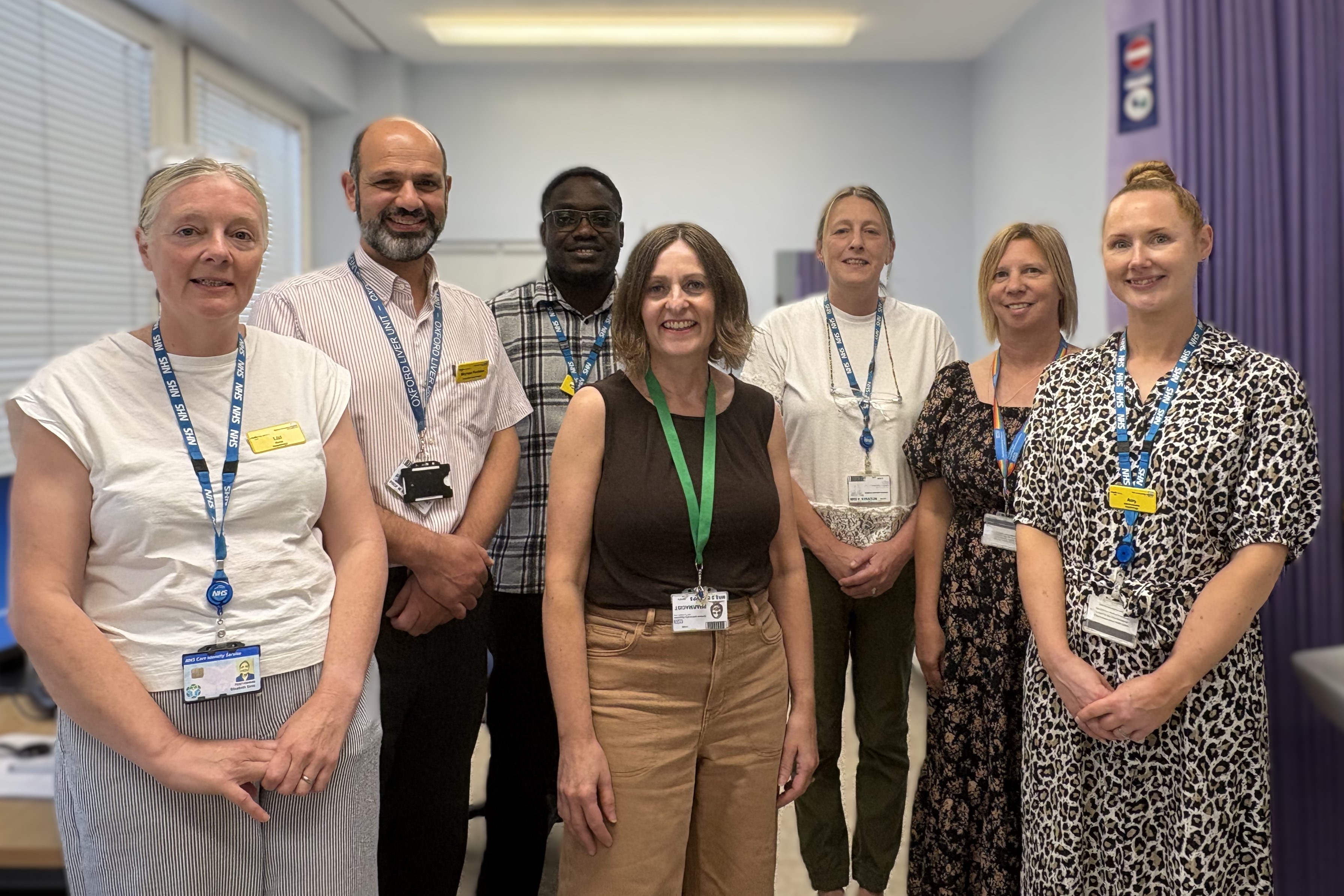
Lizi Sims (left), Hepatology Community Nurse Manager, and the Community and Hospital Hepatology teams
Specialists at Oxford University Hospitals (OUH) are encouraging people to get tested for hepatitis B and hepatitis C as part of World Hepatitis Day on Tuesday 28 July.
Hepatitis B and C are viral infections that affect the liver and can often cause no symptoms for many years. Without treatment, they can lead to serious liver disease, liver scarring and liver cancer.
Globally, an estimated 287 million people are living with hepatitis B or C, many without knowing it. Together, the infections cause more than 1.3 million deaths each year and are the leading cause of liver cancer.
The OUH Viral Hepatology team is encouraging more people to understand their risk and access testing where appropriate.
The multidisciplinary team provides testing, treatment and support for patients across Oxfordshire and the wider Thames Valley. In Oxfordshire, almost 400 people are currently receiving treatment for hepatitis B, while 187 patients were treated for hepatitis C across the Thames Valley in 2025/26.
Lizi Sims, Hepatology Community Nurse Manager at OUH, said: "Many people with hepatitis B or hepatitis C don't realise they have the infection because there are often no symptoms in the early stages – it can be silent, until they present with late disease.
"Testing is simple, and early diagnosis can make a huge difference. Effective treatments are available to control hepatitis B infection, and for hepatitis C, many patients can be cured.
"We're encouraging everyone to take a few minutes on World Hepatitis Day to learn more about hepatitis, consider whether testing may be right for them, and help reduce the stigma that can sometimes be associated with the condition."
People can get tested for hepatitis B using a simple blood test at GP surgeries, sexual health services, and drug and alcohol services.
Those aged 18 and over in England can order a free, confidential home test for hepatitis C through the NHS testing portal. The self-sampling kit uses a simple finger-prick blood test and can be completed at home.
People may wish to consider testing if they were born in, or have lived in, parts of the world where hepatitis B and C are more common, including sub-Saharan Africa, Asia and the Pacific Islands, the Middle East, parts of South America, and central and eastern Europe.
Testing may also be appropriate for those who have been exposed to other risk factors, such as unprotected sex, injecting drugs, receiving a tattoo, piercing or medical treatment with unsterilised equipment, having a blood transfusion before routine screening was introduced, or being born to a mother with hepatitis B or C.
To mark World Hepatitis Day, the Hepatology Community team will host an information stand at the John Radcliffe Hospital on Tuesday 28 July, 8.30am-4.30pm, located on Level 2 opposite the League of Friends café.
Staff and visitors will be able to speak to the team, learn more about hepatitis and access information on testing and treatment.
For advice on hepatitis, please contact the Hepatology Community team on hepadmincomm@ouh.nhs.uk.