Patient experience highlights impact of early diagnosis of oesophageal cancer
27 February 2026
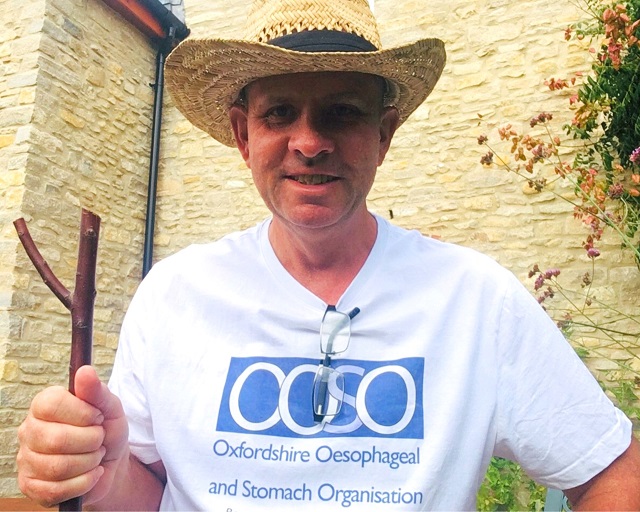
Matt Carter
February is Oesophageal Cancer Awareness Month, and Oxfordshire patient Matt Carter – who is marking 10 years since his treatment at the Churchill Hospital, part of Oxford University Hospitals NHS Foundation Trust (OUH) – has shared his story to help raise awareness of oesophageal (food pipe) cancer.
Matt's experience highlights both the exceptional care delivered by OUH clinicians and the life‑saving importance of early diagnosis.
Matt was diagnosed with oesophageal cancer in 2014 and underwent a complex treatment pathway at the Churchill Hospital, involving chemotherapy and radiotherapy, followed by a major surgery in 2015.
He describes the care he received at the Churchill, especially within the Upper GI team, as "brilliant," adding: "The consultants, specialist nurses, dieticians and everyone involved were so personalised in their care. I felt completely looked after throughout my treatment. The Churchill has an amazing reputation for a reason. I wanted to give back to the people who cared for me."
A decade of supporting other patients, families and OUH
A year after his surgery, Matt was invited to a meeting run by the Oxfordshire Oesophageal and Stomach Organisation (OOSO), a charity supporting patients diagnosed and treated at the Churchill since 2009.
What began as helping at a few fundraising events soon grew into a deeper involvement. Matt became a trustee in 2016, and in 2020 he took on the role of Chair. Over ten years, he has helped shape and strengthen the support OOSO offers patients and families.
Around 300 people are diagnosed with oesophageal or stomach cancer in Oxfordshire and surrounding areas each year, and more than half are referred to OOSO for support.
Today, OOSO provides:
• information and guidance through booklets, leaflets and online resources
• regular in‑person support groups and café meet‑ups across Oxfordshire
• virtual sessions to connect patients and families
• a seven‑days-a-week telephone support line
• a fortnightly newsletter with updates and advice
• fundraising to donate equipment for the Upper GI ward and chemotherapy suite
• involvement in research and clinical trials aimed at improving treatments and quality of life.
The importance of recognising symptoms early
Matt explained: "Late diagnosis remains one of the biggest challenges. Survival rates for advanced-stage oesophageal cancer are low, but early diagnosis significantly increases the chance of successful treatment. We often don’t realise we’re seriously ill until it’s too late. Unfortunately, the symptoms are relatively common and might be caused by a variety of issues. However, seeing a GP is more important than leaving a persistent symptom to only get worse. Please take the symptoms seriously and see your GP. You won’t just be saving your own life – your family and friends will be grateful you did."
Key symptoms include:
• difficulty swallowing or regurgitation after eating
• persistent acid reflux, heartburn or indigestion
• unexplained weight loss or extreme fatigue
• persistent stomach pain
• feeling full or bloated all the time.
Professor Nick Maynard, OUH Consultant Surgeon, who is also a trustee of OOSO, said: "Thank you to Matt for sharing his experience and highlighting the importance of early diagnosis when it comes to oesophageal cancer.
"We still have patients with late-stage cancer, and it never gets easier to give that news. If more people recognised these symptoms earlier, we could save many more lives."