Successful AVT pilot at OUH shows promising results for staff and patients
23 February 2026
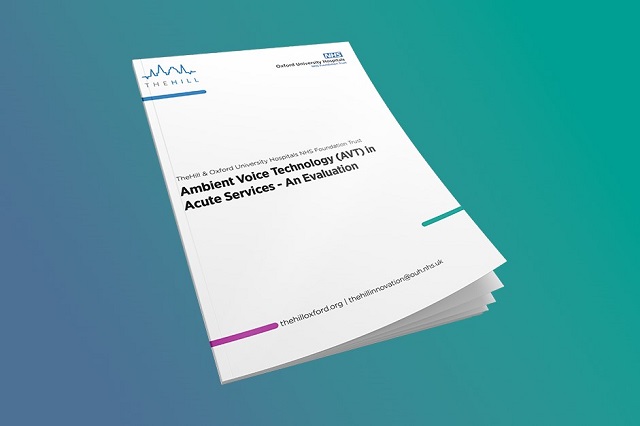
A successful pilot of Ambient Voice Technology (AVT) at Oxford University Hospitals NHS Foundation Trust (OUH) has shown clear benefits for reducing administrative workload and improving the working lives of clinical staff, while maintaining high levels of patient satisfaction.
AVT is a type of technology that uses a microphone and secure artificial intelligence (AI) software to help clinicians document patient consultations in real time. It works by capturing spoken words and converting them into clinical notes and letters, which are then reviewed by clinicians to ensure accuracy and completeness before being stored in health records.
Organised by TheHill, the Trust's digital innovation team, the pilot explored whether AI‑enabled voice tools could help ease the growing administrative pressures faced by clinicians and support more efficient, patient‑centred care.
Over the trial period, clinicians tested four AVT solutions across a range of inpatient and outpatient settings, each with different levels of complexity and workflow needs. The evaluation report summarised staff experiences from across these varied use cases and provided an evidence base for the potential future adoption of AVT technologies at OUH.
TheHill’s Director, Megan Morys-Carter, who is also the Director of Digital Innovation at OUH, explained the results:
"This work reflects one of the most comprehensive evaluations of AVT undertaken in an acute NHS
setting to date.
"The pilot showed clear benefits for clinicians and patients. Nearly 90% of clinicians reported reduced documentation time, with over half saving 30 minutes or more each day. 73% experienced improved wellbeing, citing reduced stress and administrative burden.
"AVT produced consistently accurate clinical records with only minor edits needed, and almost 70% of participants rated dictation quality as excellent or good.
"Patient response to the use of AVT was overwhelmingly positive, with 99.7% consenting to its use during the pilot and staff reporting that patients found the process efficient, thorough, and helpful.
"This successful pilot shows how AVT can make a real difference to clinicians’ day‑to‑day work. Staff told us it saves them time, reduces stress, and helps them focus more on patients. These findings give us confidence that AVT has real potential to support future digital transformation at OUH, and across other acute settings in the NHS. It also gave us valuable insights into how to structure procurement and implementation to ensure benefits are realised for hospitals and their staff and patients."
Ben Attwood, Chief Digital & Information Officer at OUH, said:
"We are excited by the results of the AVT trials at OUH. Thanks to all the clinicians, nurses, allied health professionals, and operational colleagues who took part, as well as patients, the teams within TheHill and our digital directorate who supported the project.
"As AVT gains national attention for its potential to support NHS productivity, OUH’s experience will provide valuable insight into how the technology could be deployed effectively to reduce workload and increase efficiency, in acute settings. The pilot also supports ambitions in the NHS 10‑Year Health Plan to move from analogue to digital systems and improve staff retention and patient care."