Pregnant volunteers help doctors reduce risk of preterm birth
04 February 2026
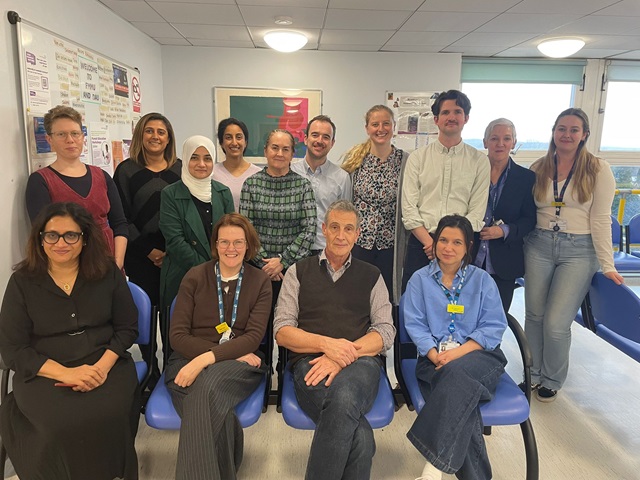
OUH staff and colleagues from partner organisation
NHS doctors are better prepared to identify those at increased risk of giving birth before term following a pilot programme bringing together preterm birth specialists and more than 250 pregnant volunteers.
The aim is to help resident doctors in obstetrics and gynaecology to quickly identify women at risk of giving birth prematurely so that they receive the right care in the right place at the right time, contributing to better outcomes for mothers and babies, fewer unnecessary transfers between hospitals and less pressure on beds and services.
More than 40 doctors have been given practical help to carry out an additional ultrasound scan to measure the length of the cervix in pregnant women at 16-34 weeks gestation. They are now certified to perform these scans in practice, improving preterm birth prediction and prevention.
Six sessions took place at two NHS hospitals (four at Oxford University Hospitals (OUH) and two at Buckinghamshire Healthcare) between June 2025 and February 2026. More than 150 women cared for at OUH volunteered.
Pregnant volunteer Jenny Anslow, also an OUH midwife, said: "It was really reassuring that everything is okay with my cervix at this stage of my pregnancy."
One of the doctors who took part was Dr Elizabeth Kostov from OUH. She said: "The day was so well run, and it was so beneficial to be able to have the opportunity to scan real patients with real-time feedback from experienced senior clinicians. I learnt a lot, and this will certainly have a positive impact on how I manage patients."
Dr Charlotte Benson, another OUH doctor, said: "Thank you for such a brilliant day's training - the supervised experience scanning real patients has been invaluable."
Katy Hoare, Regional Specialist Preterm Labour Midwife based at OUH, said: "We are extremely grateful for the interest in and support for this project. An additional 46 doctors are now able to perform cervical length scans in practice, meaning that preterm birth prediction and prevention will be improved across the Thames Valley region.
"The next steps will be for the doctors to consolidate this skill and teach their colleagues, making this a sustainable intervention. The biggest thanks go to the 266 women who were scanned, most of whom were volunteers – we could not have facilitated this without their generous support, and they have made a considerable contribution to improving pregnancy care for all."
Dr Maria Ivan, the project’s clinical lead, said: "Initiatives like this demonstrate how targeted, high quality education programmes can accelerate early competence, reduce variability in clinical practice and ultimately improve maternity care for women at increased risk of preterm birth."
This initiative is coordinated by the maternity and neonatal patient safety team at Health Innovation Oxford and Thames Valley (HIOTV).
Eileen Dudley, Senior Programme Lead Patient Safety and Maternity/Neonatal Safety Improvement Programme Lead at HIOTV, said: "This innovative project has been a resounding success and a fantastic example of collaboration within the HIOTV network. In addition to the excellent training and education for 46 registered doctors, the project has facilitated opportunities for external clinicians to observe the education days, and we are encouraged at their commitment to deliver the programme in their own trusts."